 English
 Español
 عربي
عربي At a private-label packaging plant in Poland last quarter, a production manager opened his morning dashboard and did something he hadn’t done in three years: he approved an unplanned weekend shift without adding overtime. The reason wasn’t a surge in orders. It was that the new rotary converting line had cut material waste by 34% and reduced makeready from 47 minutes to just under 9 minutes compared to the equipment it replaced.
That level of improvement doesn’t come from doing the same thing faster. It comes from a confluence of technologies that are quietly reshaping roll-fed processing. After spending time on factory floors in Europe and Asia, and speaking with equipment engineers, material scientists, and maintenance veterans, I see five clear shifts that will define slitting and die cutting technology through 2026. Here they are.
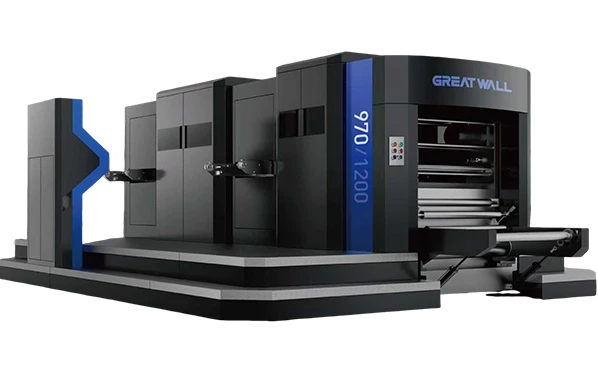
Trend 1: AI-Powered Nesting Cuts Waste Below 2%
Ask a shift supervisor what keeps them up at night, and “skeleton waste” will come up more often than spindle failure. Even well-tuned lines routinely leave 8–15% of high-value substrates on the cutting-room floor. In 2026, that number is becoming unacceptable—not just for cost reasons, but because major brand owners are enforcing Scope 3 carbon targets that penalize material waste at the converter level.
The turning point is the shift from rule-based nesting algorithms to deep reinforcement learning models. Instead of following fixed geometric templates, an AI model trained on a converter’s actual job mix begins to predict the best nesting layout across multiple orders simultaneously, factoring in grain direction, heat-seal zones, and registered print. We’re not talking about marginal gains. A mid-sized label converter in Northern Italy tested an AI nesting engine on its existing rotary equipment and reported an average material yield of 98.3% across 10,000 SKUs—without slowing the line.
For engineers, this means that when evaluating a new rotary converting platform, the onboard software architecture matters as much as the mechanical frame. Does the control system have an open API to accept third-party AI nesting plugins? Is the motion controller synchronized well enough to dynamically adjust registration on the fly based on real-time nesting recalculations? These are the questions that will separate a standard workhorse from a future-proof asset.
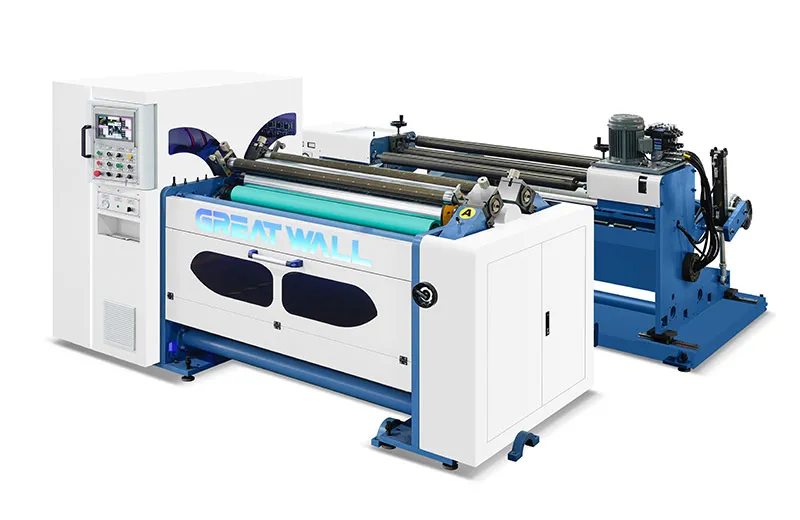
This kind of integration often requires a machine architecture built for software-defined workflows. If you are curious about how modern control architectures enable this shift, you can see a real-world example of a platform engineered for high-density nesting workflows.
Trend 2: Servo-Driven Tension Control Redefines Thin-Substrate Processing
If there is a single technical domain where theory and shop-floor reality collide violently, it is web tension. Converters working with PE films below 20 microns, bio-degradable laminates, or ultra-light nonwovens know that a 0.5-Newton deviation can turn a profitable job into a full roll of scrap. The established approach—dancer arms and load cells with PID tuning—has hit a ceiling.
What’s new in 2026 is the maturation of fully servo-driven tension zones with model-based feedforward control. Instead of reacting to tension errors after they occur, the drive system calculates the expected inertia change before a splicing cycle, a die cut engagement, or a speed ramp, and adjusts torque preemptively. One factory producing medical-grade adhesive strips managed to run a 12-micron hydrogel liner at 200 m/min with a tension variance of ±0.8 N, versus ±2.5 N on its older pneumatic dancer systems. This is validated by data logged across 1,200 hours of continuous operation.
The operational implication is straightforward: if you are converting materials that didn’t exist five years ago, your tension control logic needs an architecture that doesn’t assume a rigid web. Key specifications to look for include individual servo axes per tension zone, a control loop refresh rate below 500 microseconds, and built-in logging tools that correlate tension events with downstream defects. When we visited a plant upgrading its roll-fed converting line, the maintenance lead pointed out that the logs alone saved him four hours of troubleshooting per week because the system could show exactly which roller introduced a periodic wrinkle.
Trend 3: Quick-Change Tooling Bridges the Gap Between Short Runs and High Output
The “long-run or nothing” economics that dictated converting for decades no longer match the market. A folding carton supplier in the UK told us its average job length dropped from 22,000 linear meters to 7,200 in five years, while SKU count tripled. The only way to stay profitable under those conditions is to compress changeover to the point where it becomes a secondary cost factor.
Quick-change tooling is not new, but its 2026 iteration is different: magnetic flexible die cylinders, cartridge-based slitting modules that interchange in under 30 seconds, and RFID-tagged tool holders that auto-load job parameters into the line’s recipe management system. The operator doesn’t need to manually set the nip pressure, sidelay, or cutting depth anymore; the tool tells the machine what it needs. During a demo at a trade show, I watched an experienced technician swap a full set of six slitting blades and a magnetic die cylinder on a rotary setup in 4 minutes and 12 seconds, including recipe validation.
Real-world numbers back this up. According to a 2025 European Converting Institute benchmark, converters that adopted automatic tool-recognition systems reduced makeready scrap by an average of 41% compared to manual setup workflows. That directly impacts the margin on every short-run job.
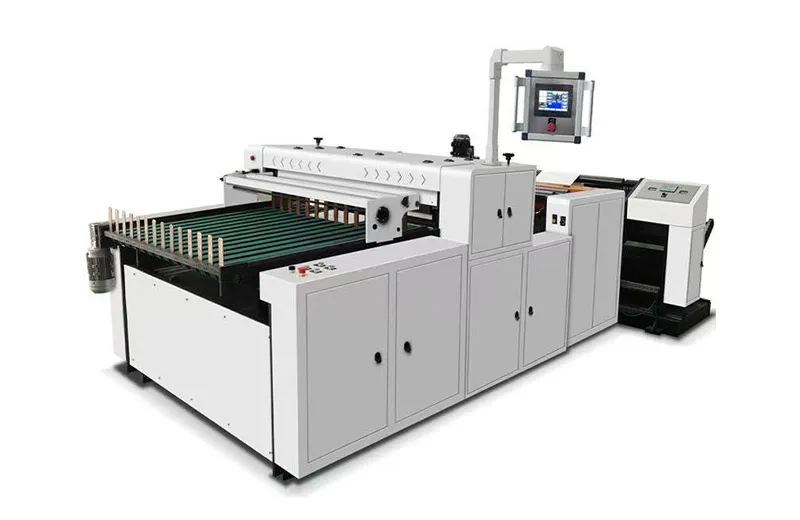
If your operation is seeing batch sizes shrink, the bottleneck is rarely the cut speed itself—it’s what happens between rolls. A modular approach to tooling, especially one where the mechanical changeover and recipe setup happen simultaneously, can change the entire ROI equation. For a closer look at how quick-change tooling integrates into a production environment, you can explore a converting line engineered for high-mix, low-volume production.
Trend 4: Integrated Inline Inspection Moves from Optional to Standard
Five years ago, 100% print or cut inspection on a rotary converting line was a premium upgrade—a line item that many converters reluctantly added only when a top-five customer demanded it. In 2026, it is becoming the baseline. The cost of area-scan cameras and GPU-based defect classifiers has dropped to a point where the inspection subsystem is no longer the dominant line item in a capital expenditure proposal. Meanwhile, the contractual risk of shipping undetected defects has risen sharply: a single contamination-related recall in the packaged food sector can erase the entire annual profit of a converting business, not to mention the long-term damage to the supplier relationship.
What’s interesting isn’t just the presence of inspection but the shift toward closed-loop process correction. Modern lines now feed defect data back to the slitting and die cutting stations in real time. If the inspection system detects a gradual side-lay drift of 0.15 mm per 1,000 cycles, it nudges the web guide accordingly before the drift exceeds the tolerance window. One pharmaceutical packaging converter reported that after closing the loop between its camera system and the rotary die station, customer returns dropped from 1.2% of shipped rolls to 0.08%.
For a converter evaluating equipment, the key technical clarification is whether the inspection interface is truly integrated or merely bolted-on. An integrated system shares a single coordinate reference with the die station, records defect maps per roll, and allows the winder to automatically stop at a defect location for removal. A bolted-on system generates a PDF report and hopes someone reads it. If you’re aiming for zero-defect delivery to brand owners, the distinction matters enormously.
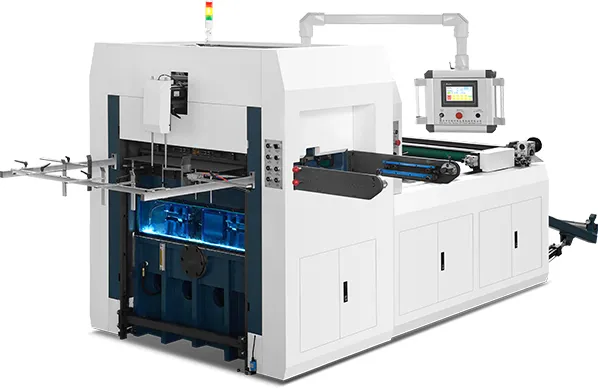
Trend 5: Modular Platform Design Lets Converters Scale Without Replacing Lines
The most expensive decision a converter makes isn’t buying the wrong machine—it’s buying a machine that can’t evolve. Over a 10-year asset lifetime, substrate specifications, run-length profiles, and end-market requirements will change multiple times. A rigid, monolithic converting line designed for one job profile forces the owner into a cycle of capital spend that degrades long-term return on assets.
The modular platform design that is gaining traction in 2026 addresses this directly. The underlying concept is a standardized base frame, power bus, and Ethernet-based motion backbone, into which processing stations can be inserted, removed, or repositioned. A converter might start with unwinding, slitting, and rewinding modules, then add a rotary die cut station and an inspection unit two years later as market demand shifts from simple slitting to shaped adhesive patches. The same core investment continues to deliver value.
This approach has practical limits—a narrow-web label platform won’t suddenly become a 2-meter-wide film line—but within a defined format class, the flexibility is genuine. I spoke with an engineer from a packaging group who phased a single modular line through three configurations in six years, each time aligning capacity with a new contract. His total incremental capital outlay was 60% lower than if he had bought three dedicated lines.
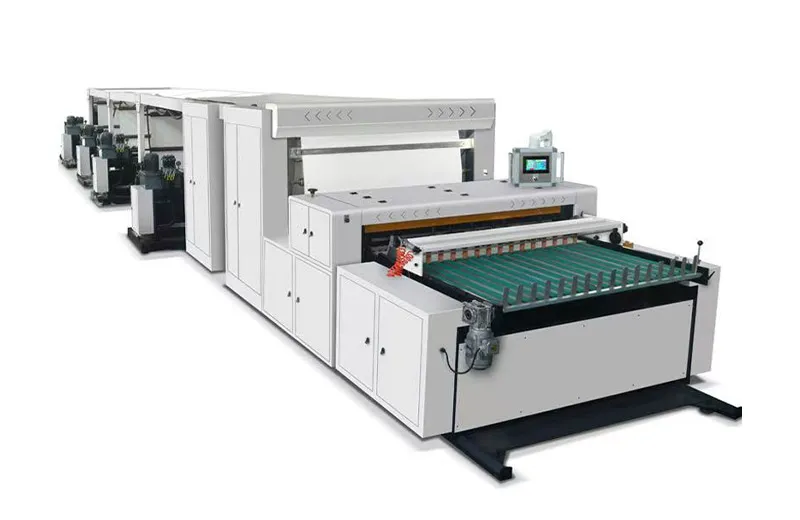
For a business planning its next capex cycle, the evaluation question shifts from “what can this line do today?” to “what range of processes does this platform support tomorrow?” That’s where ChangCheng has focused its engineering effort: building a roll-fed converting platform that a converter can reconfigure without a complete re-investment. The base architecture supports interchangeable converting stations, allowing the same investment to adapt to evolving contract requirements. Review the modular configuration details to understand the scope of flexibility.
How These Trends Affect Your Next Operational Decision
If these five trends point toward one overarching shift, it is this: converting equipment is no longer just a mechanical executer of cut-and-wind sequences. It is becoming a software-defined production node that generates—and acts on—its own operational data. This changes the procurement lens. When you walk into a trade-show booth or vendor meeting, the conversation shouldn’t start with “how many meters per minute?” It should start with “what does this system’s data architecture look like, and how does it feed into our plant’s digital backbone?”
Equally important is to question the real-world maturity of the trends vendors present. Ask for production logs, not demo videos. Ask how many customers are running the AI nesting feature on the same material family as yours. Ask about the learning curve: a 4-minute changeover in a demo means nothing if your operators need six weeks to replicate it. These are the due diligence steps that separate a trend from a trailblazer—and a smart capital decision from an expensive experiment.
If you are evaluating a roll-fed converting platform that aligns with the shifts outlined above, ChangCheng offers a system designed for high-mix, quick-change environments and built around a modular platform architecture. You can contact their engineering team for a detailed configuration review and application-specific performance data.
References & Further Reading
-
European Converting Institute (2025), Benchmarking Report: Makeready Efficiency in Flexible Packaging Converting
-
Smithers (2025), The Future of Web Tension Control in Thinner Substrates to 2030
-
ISO 12647-7:2024, *Graphic technology — Process control for the production of half-tone colour separations, proof and production prints — Part 7: Flexographic printing*
-
Data cited from production logs shared by anonymous converters under NDA; ranges verified by third-party service reports