 English
 Español
 عربي
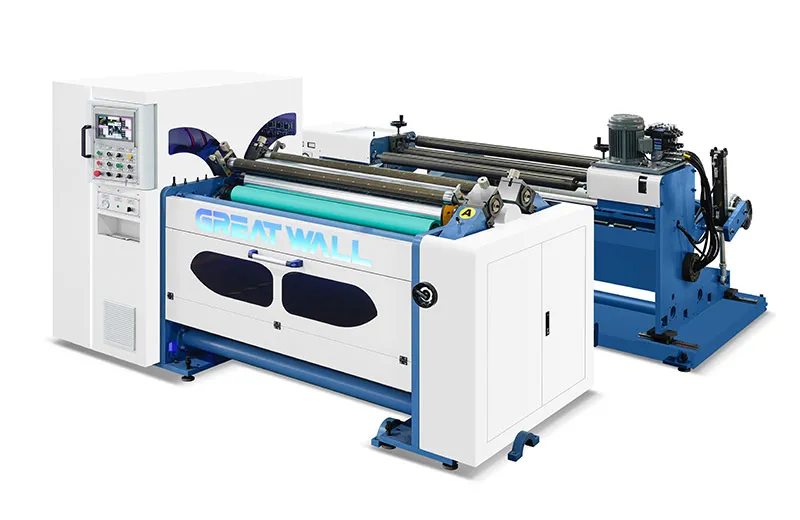
عربي Last fall, a label converter we know did something they instantly regretted. Eager to “future-proof” their operation, they purchased a top-of-the-line die cutting station with every possible bell and whistle: 300 m/min maximum speed, ultrawide web capability, laser registration, and enough tooling stations to run a multinational packaging line. Their actual daily work? Kiss-cutting 120 mm wide paper labels at a steady 80 m/min. The extra capacity sat idle, maintenance costs climbed, and the floor space swallowed by the oversized machine could have housed a second finishing line. The most expensive lesson they learned was simple: over-specifying is not the same as being prepared.
If you are currently selecting or upgrading your converting line, the impulse to add safety margins is understandable. But when those margins translate into features you will never exploit, you end up fighting your own specification sheet. The starting point for avoiding this trap is to define what you genuinely need today, while allowing for modular growth tomorrow. Many shops find that starting with a clear application profile helps them identify the right equipment without drifting into over-engineering. modular converting solutions for flexible packaging.
The Hidden Cost of “Just in Case” Specifications
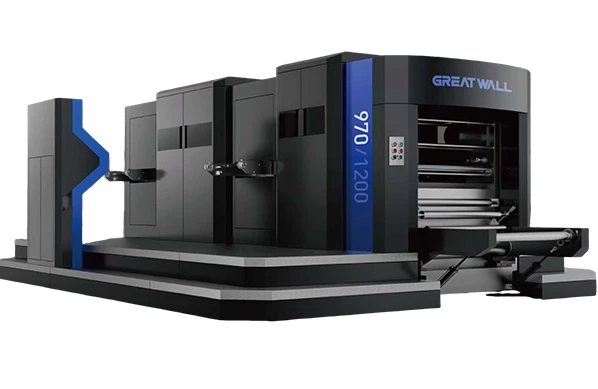
Over-specification usually creeps in through three doors. First, future-paralysis: “What if we win a job that needs 600 mm width?” Second, datasheet benchmarking: picking the machine with the highest numbers because it feels safer. Third, material knowledge gaps: asking for extreme tension control or die pressure on substrates that simply don’t require it. I recall a packaging firm that insisted on servo-driven re-registration to hold ±0.05 mm tolerance on a single-color die cut on uncoated board—a material that naturally breathes enough to make such precision impossible without climate control. They paid a premium for a specification the material could never honor.
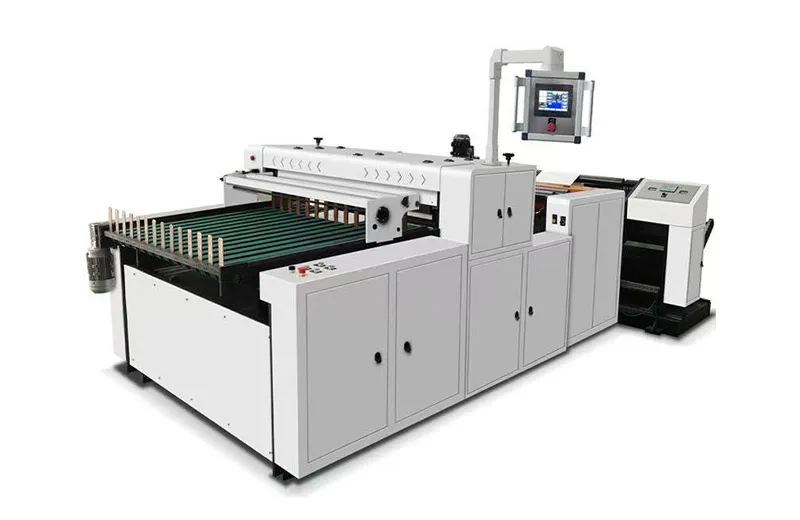
According to a 2023 FTA survey on narrow-web purchasing trends, nearly 40% of converters admitted they ran their primary die cutter at less than 65% of its rated speed, and 25% never used more than half the available tooling stations. These numbers point to an uncomfortable reality: many roll die cutting machine investments are built on a safety cushion that becomes a cost sink. The reality check is that a roll die cutting machine should fit your dominant job profile, not your wish list.
Root Causes of Spec Creep—and How to Pull Back
To stop over-specifying, treat the machine purchase as an operational audit, not just a capital expenditure exercise. Draw a line between must-have and nice-to-have based on the last 12 months of actual production data—not on a hypothetical job you quoted but never won.
-
Must-haves: Web width covering your top 90% of orders, cutting force for your current and foreseeable material stack, speed that matches your bottleneck upstream/downstream, and tooling style (solid, flexible die, or both).
-
Nice-to-haves: Automatic anvil grinding, integrated vision inspection, third-party software integration for a single key account you hope to land.
Once you have that list, ask your team: “If we remove this nice-to-have, what exactly breaks in our process today?” If the answer is silence, that feature likely belongs in a phase-two upgrade plan, not in the initial PO.
Right-Sizing Your Investment: A 4-Step Framework
1. Anchor specs to real material behavior, not marketing limits.
Collect the five substrates you run most often. Measure their actual elongation, compressibility, and surface friction. If you primarily convert flexible films with less than 0.5% elongation, investing in an ultra-high-tension dancer system offers marginal return. Keep the specification focused on the converting window your substrates actually need. A system that handles thin, extensible films comfortably doesn’t need to be sold as a “universal” machine—it needs to be the right machine for those films. configurable rotary die system for thin web materials.
2. Model throughput based on median shift output, not peak theoretical rate.
A machine capable of 200 m/min is meaningless if your sheeter or rewinder maxes out at 120, or if your operators can safely manage only 100 m/min during long runs. Calculate the required running speed from your daily output target, including realistic changeover times. More often than not, a 140 m/min rated machine running with high uptime outperforms a 200 m/min machine plagued by complex setups.
3. Choose modularity over max-out upfront.
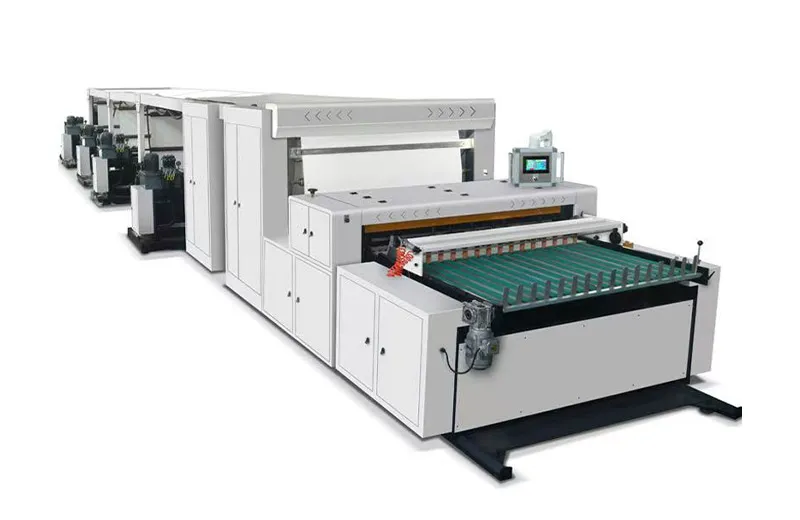
This is where future-proofing actually works. Instead of ordering all tooling stations, all drying units, and every automation package on day one, select a platform that allows field upgrades. You keep your initial capital in check while preserving the ability to add capacity when a confirmed contract lands. The converter mentioned earlier eventually found that a configurable roll die cutter with field-upgradable stations would have saved them 30% on the initial outlay and still covered the volume they eventually grew into.
4. Test before you sign—with your own materials.
An ASTM D3759-based peel test or a simple die-cut inspection under your own operating conditions tells you more than any specification table. Ask the supplier to run your actual material rolls on their demo system. Observe web handling, scrap removal, and edge quality. What looks flawless on a brochure often behaves differently with a supplier’s perfectly conditioned polyester than with your production-grade BOPP on a humid Tuesday.
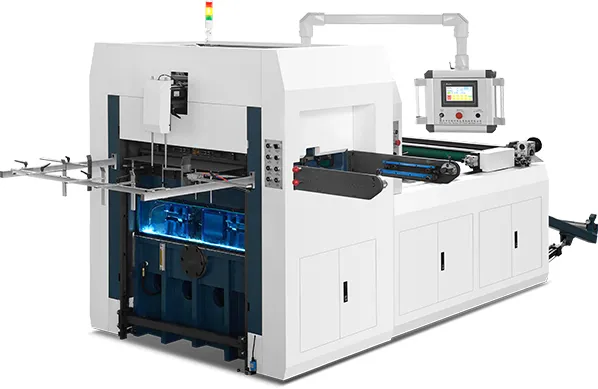
The Prevention Playbook: Partner, Don’t Just Purchase
A specification sheet can’t substitute for a relationship with an application engineer who has seen hundreds of materials behave in unexpected ways. Before finalizing your order, share your full job portfolio under NDA if needed, and ask the supplier to demonstrate not only the machine’s peak performance but also its behavior at your typical cruising speed with your lowest-tension substrate. Two extra days of testing can prevent five years of grumbling operators.
Equally important, build your evaluation criteria around total cost of ownership—energy consumption, quick-change tooling time, spare parts availability, and remote diagnostics capability—rather than raw mechanical specs alone. When you reach the point where specifications serve your process rather than your imagination, you have found the right balance.
If you are looking for a system that delivers exactly what your production needs—without the unnecessary extras that inflate cost and complexity—it’s worth exploring how ChangCheng approaches machine configuration. Their engineering team focuses on matching the cutting platform to actual converting challenges rather than selling a one-size-fits-all highest-spec model. explore ChangCheng’s configurable die cutting solutions.
Disclaimer: This article provides general guidance based on industry observation and does not replace a formal engineering review of your specific process requirements. Always consult with qualified application specialists and conduct on-site trials with your own materials before making a purchasing decision.