 English
 Español
 عربي
عربي The morning shift had just started when the line supervisor stared at the new job ticket: 0.12 mm aluminum foil, finished widths from 35 mm to 210 mm, a total of 18 strips. Last week’s single‑knife setup handled a similar order, but it took hours of repositioning. The multi‑knife arbor sitting on the rack could slit all strips in one pass — yet the team recalled the burr issues from the last time they tried it on ultra‑thin foil. This everyday dilemma repeats in converting plants, packaging facilities, and metal service centers worldwide. The choice between single knife and multiple knife slitting goes far beyond blade quantity; it touches on tension control, shaft rigidity, changeover time, and material behavior.
Before you decide on a new processing line, understanding these two core approaches becomes a crucial step. An investment in a complete coil slitting solution must align with your material spectrum and production goals.
The Basics of Slitting Geometry
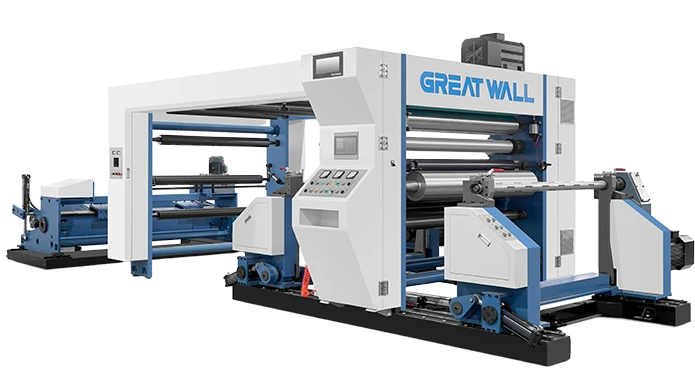
Slitting is the longitudinal cutting of a master coil into narrower strips. A single knife system uses one upper and one lower blade pair, moving transversely across the web (or the web moves) to create each slit sequentially. A multiple knife system mounts a series of blade pairs on a common arbor or shaft, enabling all cuts to happen simultaneously. Both methods rely on shear cutting, razor cutting, or crush cutting depending on material type. A modern slitting machine often allows switching between these two modes with modular knife holders, but the underlying engineering constraints remain.
While the definitions are simple, the practical trade-offs are substantial. Let’s break them down across six dimensions that directly affect your output quality and cost per ton.
1. Changeover and Setup Time
Single knife systems excel when width changes are frequent but involve only one or two strips. Repositioning the blade carriage can be automated, but each new width adds cycle time. For a large number of strips, sequential cutting multiplies downtime. Multiple knife slitters, once set with spacers and blades for a given width combination, can produce dozens of strips in seconds. However, changing all knife positions for a new slitting recipe can be labor-intensive unless a cartridge or cassette system is used. According to a benchmark by the Association of International Metallizers and Coaters, converting a 10‑strip multi‑knife setup without quick‑change cartridges takes roughly 45 minutes, while a motorized single knife sled can shift between two‑strip orders in under 2 minutes.
2. Slitting Precision and Edge Quality
When a single blade pair engages the material, the side forces are relatively low, and the shear angle can be maintained precisely for each cut. This makes single knife slitting the go‑to for delicate films, thin foils (down to 5 µm), and high‑value materials where a single burr means rejection. Multiple knife systems must share the same arbor deflection. Even with high‑grade alloy shafts, the cumulative load may cause micron‑level sag, affecting the outermost strips differently than the center ones. Premium multi‑knife assemblies compensate via crowned arbors or hydraulic preloading, achieving tolerances of ±0.03 mm. Still, when slitting 1.5 µm capacitor film, many converters stick to single knife rewinding for absolute consistency.
3. Material Compatibility
Thick, rigid webs like 2 mm steel coil, heavy board, or abrasive materials favor the multi‑knife approach because the robust arbor absorbs cutting forces uniformly. Single knife slitting of thick materials suffers from slower speeds and the need to repeatedly re‑penetrate the edge, causing inconsistent side flow. Conversely, sticky or extensible materials like low‑density polyethylene and certain nonwovens benefit from the controlled, gentle single‑knife action that reduces edge welding. In the label industry, adhesive coating that fouls blades makes quick single‑knife changeover ideal, while mass production of paper‑based release liners runs efficiently on multi‑knife shear slitters.
4. Trim Waste and Yield
Multi‑knife slitting often produces a higher trim ratio during edge‑trim passes, but because it cuts all strips simultaneously, the overall scrap generation per ton can be lower for large runs. A single knife allows dynamic web guiding that can shift the slitting pattern to avoid defects, thus saving material. Real‑world data from a BOPP film plant showed that by switching from a fixed multi‑knife arrangement to an intelligent single‑knife line with defect mapping, edge waste dropped by 1.8%, translating to over $40,000 annual savings.
5. Speed and Throughput
Modern multiple knife slitters for light films can run at 800 m/min or higher because the cutting tools remain stationary. Single knife systems, limited by carriage dynamics and vibration, typically operate up to 300 m/min in production. For metal slitting lines, multiple knife arbors handle 200–300 m/min for thin gauge, while a single cold‑shear slitter rarely exceeds 80 m/min for repeat cuts. Therefore, if your business case relies on high‑volume standardized output, high-speed multi-knife slitting systems integrated with automatic tension control deliver unmatched efficiency.
6. Investment and Lifecycle Cost
The initial price of a single knife machine is attractive for startups or niche converters. However, scaling up with multiple single‑knife lines to match throughput may cost more in floor space and labor than one multi‑knife line. Multi‑knife slitters demand precision‑ground spacers, shear knives, and regular arbor inspection — maintenance costs run higher. A slitting machine designed for multi‑knife operation must factor in blade regrinding intervals, expected scrap rates, and labor. Industry standards, such as ISO 13953 for burr height control, provide a useful framework to evaluate quality consistency.
How to Make the Right Choice
Instead of asking “which is better,” focus on your production profile. Answer these questions:
-
Are your production batches typically less than 5,000 linear meters with frequent width changes? A single knife setup minimizes setup penalties.
-
Do you run the same four to twelve widths weekly with volumes exceeding 100,000 meters? Multiple knife slitting is your workhorse.
-
Is your material highly sensitive to edge deformation (e.g., battery separator film)? Lean toward single knife with active tension isolation.
-
Do you require just‑in‑time delivery of multiple narrow coils from a single master? The multi‑knife arbor becomes essential.
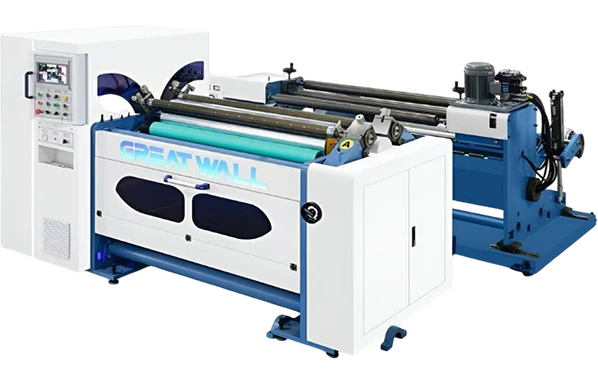
Often the optimal solution is a hybrid line: a multi‑knife slitting section for the bulk strips combined with a single slitting station for edge trimming or odd‑width strip. We’ve seen this configuration reduce total downtime by 35% in a copper foil facility processing both battery anode and flexible circuit materials. That plant integrated a custom slitting line layout where a quick‑swap arbor cartridge handled the repetitive widths, while a servo‑driven single knife trimmed the edges and cut the occasional non‑standard strip.
Bringing It Together
The choice between single knife and multiple knife slitting is not about the number of blades — it’s about matching the cutting physics to your material rheology, order pattern, and cost structure. In our experience working with hundreds of converters, the most successful ones don’t force one method to handle everything. They map their product portfolio against the strengths of each method and, when needed, adopt modular designs that accommodate both. Ultimately, the slitting machine you select must adapt to both current orders and future growth.
If you are evaluating a new system or upgrading an existing line, explore detailed slitting configurations that can be tailored to your specific films, foils, or metals. Our application engineers can help analyze your current scrap rates, changeover times, and target throughput to recommend whether a single, multi, or combined approach delivers the fastest payback.
Disclaimer: The cutting performance data cited are based on typical machine specifications and may vary depending on material properties and operating conditions. Always consult equipment manufacturers for feasibility trials.