 English
 Español
 عربي
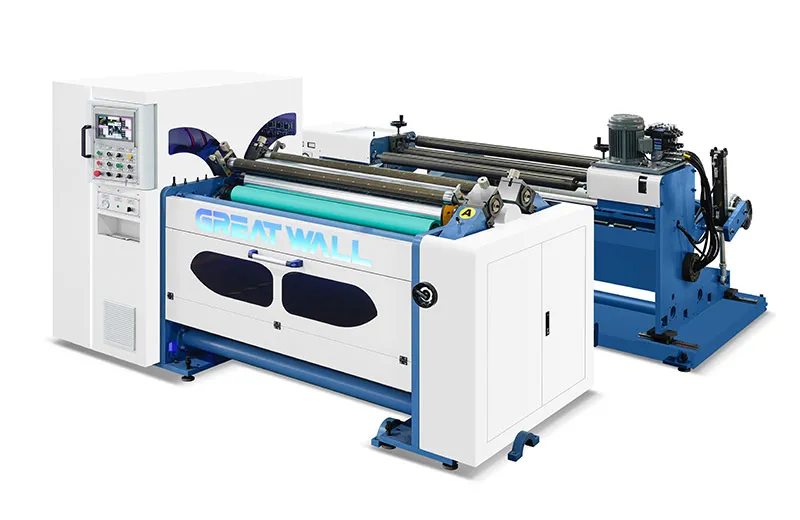
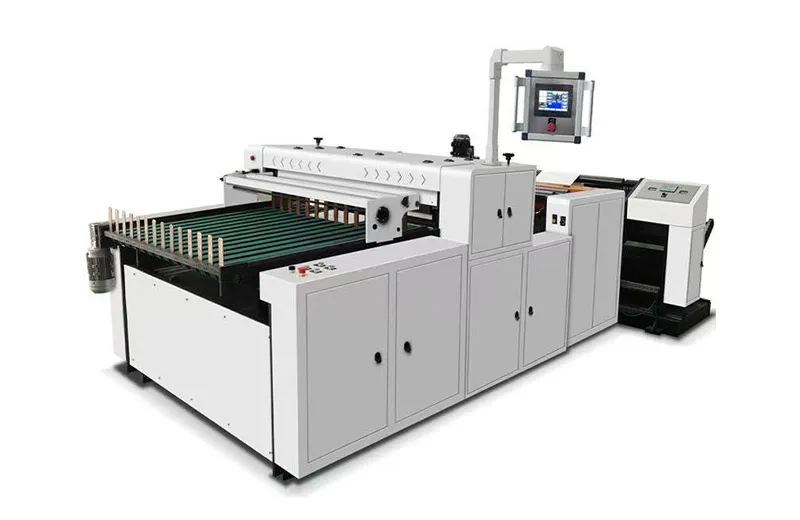
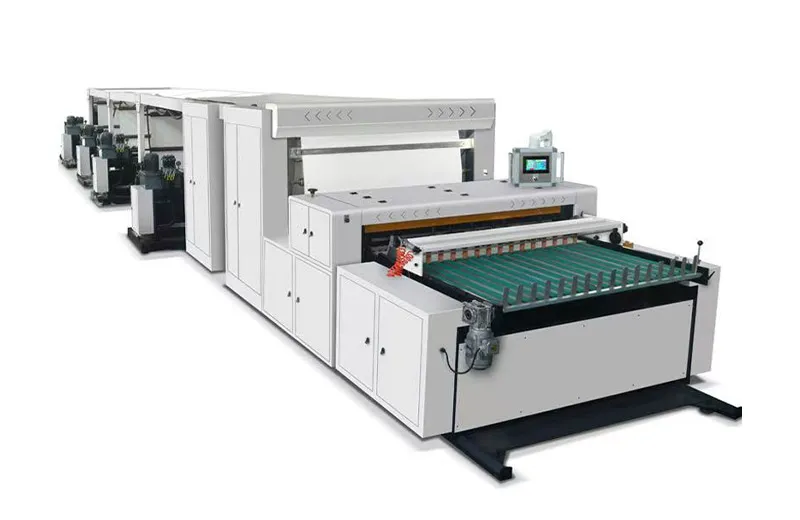
عربي If you’re a packaging converter, label producer or flexible material processor hunting for clear, practical answers to continuous web cutting operations, this guide breaks down every functional detail of the Roll Die Cutting Machine in plain, industry-focused language. Unlike intermittent cutting equipment, this streamlined industrial setup handles endless rolled substrates such as adhesive labels, flexible films and packaging foils through rotating cylindrical tooling, finishing cutting, scoring and perforation in one seamless web pass. It eliminates frequent line halts, curbs unnecessary material loss, and has evolved into a mainstream staple for modern high-volume converting workflows across global packaging sectors.
Core Operational Stages Behind Continuous Web Cutting
Most new plant managers mistakenly simplify this industrial process as basic roller pressing, yet every functional stage is engineered with micron-level precision to avoid alignment errors, substrate tearing or mass production defects. Each link is tightly coordinated to adapt to thin, stretch-prone films and thick composite packaging materials alike.
-
Automated Unwinding & Smart Tension StabilizationThe entire workflow kicks off with controlled raw roll unwinding, far beyond basic spool rotation. Modern integrated units adopt dynamic tension adjustment modules to balance pulling force in real time, a critical detail for fragile substrates like thin BOPP films and pressure-sensitive sticker stocks. Even minor tension fluctuations can trigger lateral shifting or longitudinal stretching, which easily ruins bulk printed packaging batches with misaligned graphics.
-
Visual Edge Positioning & Deviation CorrectionNext, high-sensitivity optical detectors and mechanical edge guides lock running materials into fixed transport tracks. For pre-printed shrink sleeves, food packaging labels and patterned flexible rolls, this real-time calibration guarantees every cutting contour aligns with pre-designed artwork. It directly cuts down on discarded defective goods caused by offset trimming, a hidden cost many small-scale manufacturers overlook.
-
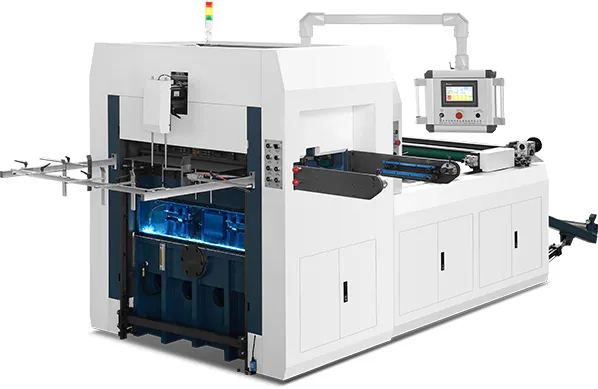
Rotary Tooling Synergy & Multi-Function One-Pass ProcessingMaterials advance steadily between customized cylindrical dies and wear-resistant hardened anvil rollers. Synchronized rotational speed ensures stable pressure distribution, enabling integrated tasks including kiss-cutting, creasing, tear strip perforation and full through-cutting. Merging multiple processing steps into one continuous cycle drastically shortens secondary production procedures and eases workshop bottlenecks for multi-spec packaging orders.
-
Automatic Matrix Waste SeparationRight after contour forming, integrated suction systems and peeling roller assemblies rapidly strip excess edge scraps and intermediate waste frames. This automated waste removal design replaces tedious manual trimming, slashing repetitive labor costs and preventing secondary scratching on finished product surfaces during manual handling.
-
Final Rewinding Or Fixed-Length SheetingCompleted semi-finished goods are either rewound into compact standard rolls for subsequent lamination and printing, or segmented into uniform single sheets to match downstream box assembly and packaging demands. This dual output mode adapts to diversified downstream production arrangements.
For factories dealing with mixed material thicknesses or irregular cutting contours, tailored tooling tolerance adjustment is indispensable.
Overlooked Operational Drawbacks in Conventional Cutting Lines
With over twelve years of hands-on experience collaborating with packaging and converting factories, I’ve witnessed countless procurement teams prioritize only upfront equipment prices while ignoring long-term operational losses from outdated technology. Budget-friendly intermittent cutting devices often lead to cumulative losses that far exceed initial equipment savings within one or two production years.
The 2024 United Nations Industrial Development Organization circular economy report points out that backward non-continuous processing modes cause 12% to 22% extra raw material consumption in the global packaging converting industry. Meanwhile, Technavio’s latest industrial equipment research confirms that factories relying on stop-start cutting setups lose nearly 28% of daily effective production time due to frequent machine resetting and alignment correction. These cold data figures translate directly into shrinking profit margins for mid and small-sized converting enterprises.
I encountered a typical case with a regional food packaging manufacturer last year. The facility relied on aging intermittent cutting gear for daily self-adhesive label production, recording a 4.6% regular defect rate and 14 hours of weekly manual waste sorting work. Limited by slow cycling efficiency, the production line could only maintain two daily shifts, failing to keep pace with rising seasonal order demands.
After upgrading to optimized continuous web cutting configurations, their cutting defect ratio dropped sharply to 0.6% within 30 days. Manual waste sorting work was completely eliminated, and the stable high-speed operation supported three daily shifts without extra staffing. The comprehensive savings in materials, labor and overtime expenses helped the workshop recoup equipment upgrade costs in less than eight months. Such practical optimization results reflect the core value of matching processing equipment to actual production scales.
Mainstream Cutting Tech Comparison: Match Devices To Actual Output Needs
Three mainstream cutting solutions dominate the current converting industry, each with distinct applicable scenarios, speed limits and cost structures. Blindly choosing popular equipment without matching material traits and daily output will inevitably lead to insufficient performance or functional overkill.
Intermittent Flatbed Die Cutting: Small-Batch Customization Choice
Flatbed hydraulic pressing structures remain widely used in small-batch customization and prototype manufacturing. They excel at processing thick rigid substrates such as corrugated cardboard, solid rubber and thick foam boards, with low short-distance die replacement costs for scattered personalized orders.
The fatal limitation lies in intermittent cycling operation: repeated stopping, feeding and pressing severely restrict operational speed, with maximum output far below continuous devices. Recurrent mechanical positioning errors also trigger higher defective rates, making this option only suitable for low-frequency, small-batch customized tasks rather than mass standardized production.
Digital Laser Cutting: Flexible Prototype & Specialized Processing
Tooling-free laser cutting gains popularity for rapid proofing and complex special-shaped cutting. It relies on digital pattern input to complete cutting, needing no physical die customization, which perfectly fits frequent design iteration and small-batch personalized production.
Yet obvious drawbacks restrict its large-scale industrial application. Slow cutting efficiency cannot support mass web production, and high-temperature ablation leaves scorch marks on coated films and composite packaging surfaces. Additional flue gas treatment systems also increase later operational and maintenance costs, making it more of a supplementary proofing tool than a formal mass-production device.
Continuous Rotary Web Cutting: High-Efficiency Mass Production Solution
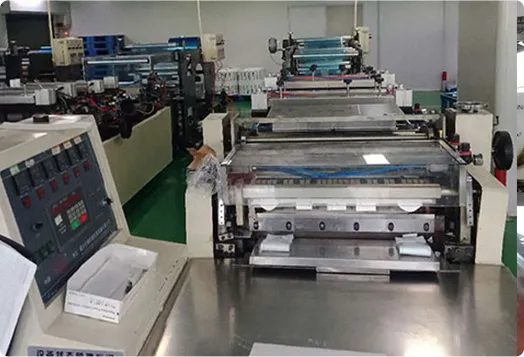
For factories focusing on long-term, large-batch production of flexible rolled materials including labels, composite films and soft packaging, continuous rotary processing stands out as the most cost-effective solution. This is where the Roll Die Cutting Machine delivers irreplaceable industrial value, maintaining nonstop stable operation and raising hourly output to ten times that of traditional flatbed equipment.
Real-time tension control and visual positioning systems stabilize web transmission throughout the whole process, controlling overall material waste below 1%. For medium and large converters with stable order volumes, this low-loss, high-efficiency operating mode creates sustained and stable cost advantages.
Why Customized Configuration Defines Long-Term Production Efficiency
Generic standardized equipment can barely adapt to differentiated production demands in today’s refined packaging industry. Every converter has unique substrate formulas, order specifications, hygiene standards and line layout limitations, and one-size-fits-all mechanical designs often leave hidden operational obstacles.
As a brand deeply rooted in industrial converting equipment manufacturing, Changcheng insists on customized configuration services instead of rigid standardized sales. For medical sterile packaging producers, we add dust-free and anti-contamination structural components to meet healthcare-level production norms. For automotive sealing foam processing, we adjust rolling pressure and tension parameters to prevent thick porous materials from compression damage. For manufacturers needing integrated processes such as online lamination and color printing, we can also build combined production lines to simplify workflow links.
The core difference between professional industrial equipment and ordinary machinery lies in post-sale adaptation and continuous optimization. We do not merely deliver finished machines; our technical team provides targeted debugging and long-term operational optimization suggestions based on each client’s on-site environment, ensuring every device runs at its optimal state.
In the end, rational cutting equipment selection never chases excessive configuration or excessively low quotes. Small-batch customized workshops can choose flatbed or laser solutions to control costs, while enterprises centered on flexible roll mass production need to prioritize continuous rotary processing systems to balance efficiency, precision and raw material utilization.