 English
 Español
 عربي
عربي Every stationery distributor has faced the same silent profit killer: inconsistent ream quality. You source what looks like a good deal on jumbo rolls, but by the time the finished packs reach your warehouse, the edges are rough, the sheet count varies, or the wrapper peels off during shipping.
The gap between a massive parent roll and a neat stack of office-ready sheets is not just about cutting paper. It is about tension, alignment, dust control, and packaging synchronization. Understanding this conversion workflow helps you ask better questions when evaluating equipment—or when troubleshooting your current output.
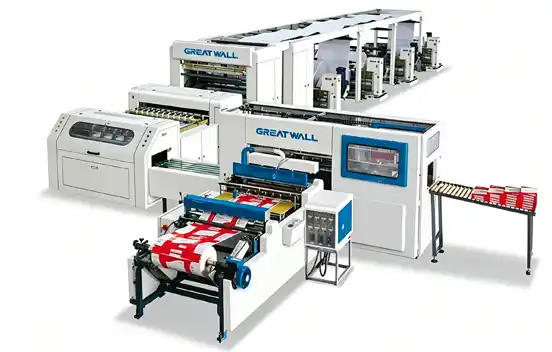
From Parent Roll to Precision Sheets
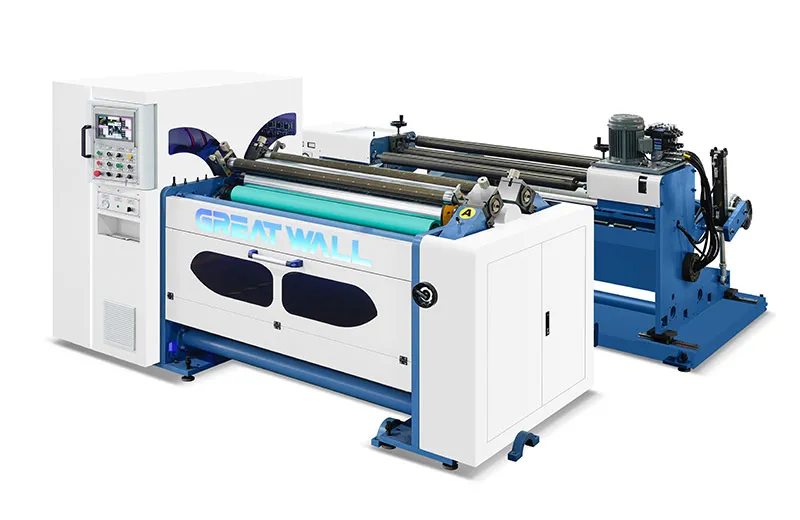
The process starts with a mother roll, often 1200mm to 2500mm wide, weighing over a ton. Unwinding this giant without stretching or tearing requires a controlled shaftless stand. If the tension fluctuates, the paper develops ‘waves’—microscopic ripples that become obvious only when the user tries to print double-sided.
Once unwound, the web moves through the slitting section. Rotary shear blades trim the edges and cut the wide web into 210mm strips. A common mistake in smaller converting plants is rushing blade changes. Dull blades do not just cut poorly; they generate fine dust. That dust settles on vacuum belts and eventually transfers onto the paper as dark streaks.
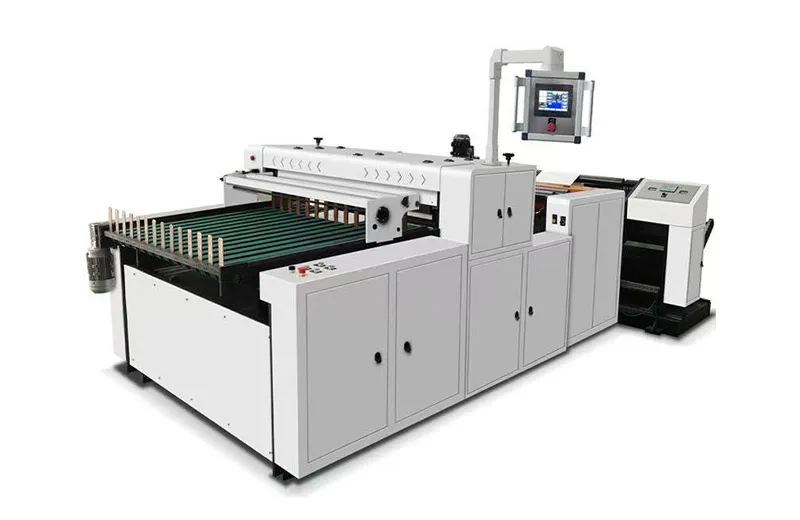
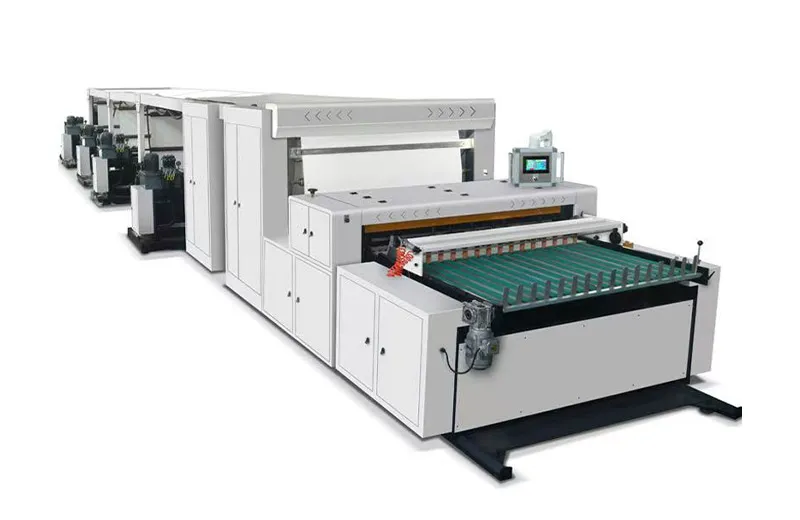
After slitting comes the cross-cutting stage. A synchronized rotary cutter chops the continuous strips into 297mm lengths. The challenge here is speed management. If the cutter runs faster than the stacker can accept, sheets collide and misfeed, creating crooked reams.
Stacking Without Compromise
The stacking unit determines whether a ream stays square. Basic lines drop sheets onto a rising pile via a backstop stop. It is simple but tends to mark the trailing edge. Better systems use a lapping bridge with an overlapping belt. This slows each sheet down gradually, allowing the leading edge of the next sheet to overlap slightly. The result is a solid, air-vented pile that stays straight.
For manufacturers producing private-label office paper, stacking accuracy directly affects brand perception. A ream that leans feels cheap, even if the paper itself is high-grade.
Wrapping and Packing for Transit
Cutting perfect sheets is only half the battle. Moisture and handling damage the rest. The packing section wraps each 500-sheet ream in a polypropylene film. The critical detail here is heat-sealing temperature control. Too low, and the film loosens. Too high, and the film melts into the paper edge, causing jams later.
Modern wrapping units include a film tension regulator and a side-seal mechanism that trims excess material automatically. After wrapping, 5 or 10 reams enter a case packer, then a palletizer stacks boxes for container loading.
According to logistics data from several Asian paper converters, improper film sealing accounts for nearly 60% of customer complaints in export shipments. The film does not break; it simply loosens enough for humidity to reach the paper, causing curl.
Avoiding the Most Expensive Operational Error
Field experience with converting lines reveals one recurring mistake: ignoring dust extraction. Slitting and cross-cutting create microscopic cellulose dust. If the vacuum system is not cleaned weekly, that dust accumulates on cutter shafts and magnetic clutches.
The result: black marks on white paper.
The cost: scrapping the top 200 reams per shift, plus blade replacement.
A simple daily routine—blowing out the shaft housings with compressed air—extends blade life by 40% or more. This is not advanced engineering. It is basic maintenance discipline that separates profitable lines from constantly troubled ones.
Matching Line Configuration to Volume
Not every operation needs max speed. Choosing the right configuration depends on your daily tonnage.
-
Low volume (under 15 tons/day): A start-stop line with manual reel change works. Focus on stacking accuracy.
-
Medium volume (15–40 tons/day): An automatic splicer avoids downtime for roll changes.
-
High volume (above 40 tons/day): Dual unwind stands and servo-driven cutters maintain tight tolerances at speed.
If your current line produces inconsistent ream height or wrinkled wrapper film, the issue is rarely the entire machine. Often it is one misaligned slitting holder or a worn vacuum belt. [Review common converting fault checklists].
Practical Advice for Factory Acceptance
When you visit a machinery supplier for testing, do not only watch the first minute of running. Ask the operator to run for 20 minutes, then take the last sheet produced. Place it against the first sheet from the run. Check three things:
-
Edge burrs – Rub your finger along the cut edge. Smooth means sharp blades.
-
Stack lean – Place the ream on a flat table. It should stand vertical without support.
-
Wrapper adhesion – Try to peel the film corner. It should resist, not slide off.
These three checks take less than two minutes. They tell you more about long-term consistency than any spec sheet.
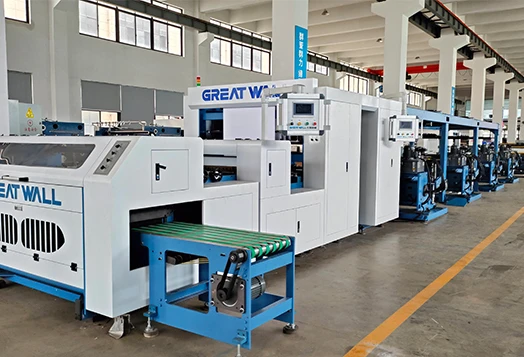
Integrating Converting and Packing
A fragmented line often creates bottlenecks. The unwinder runs at 100 m/min, but the stacker only handles 80 m/min. The solution is not buying faster components—it is ensuring the drive controls communicate.
When the cutter slows down for a knife change, the unwinder should automatically reduce tension to prevent paper stretch. This closed-loop feedback is the difference between industrial-grade converting and fragmented hobbyist setups.
For stationery brands looking to bring converting in-house or upgrade existing capacity, the decision criteria should focus on three mechanical points:
-
Tension control type: Closed-loop load cell feedback (preferred) vs. open-loop magnetic brake.
-
Stacking delivery length: Long enough to overlap sheets at max speed (typically 80–100 m/min).
-
Safety compliance: CE or equivalent safety curtains over cutter sections.
If you are currently evaluating equipment suppliers for jumbo roll processing, understanding these engineering details saves costly retrofits later. Compare technical specifications for converting lines→
Final Perspective
The converting industry sometimes overcomplicates what is fundamentally a precision alignment task. Unwind cleanly. Slit without dust. Stack squarely. Seal tightly. Every deviation from these four principles adds cost.
For businesses that have struggled with ream quality complaints, the path forward is not more expensive paper stock. It is tighter control over the conversion process itself. Whether you are running a small converting shop or planning a new factory layout, the basics remain the same: consistent tension, sharp blades, dry dust extraction, and sealed wrapping.
If you are curious about how modular converting systems handle these four challenges in an integrated workflow, the equipment overview page provides layout drawings and throughput estimates for different tonnage ranges. Explore jumbo roll to A4 pack system layouts→