 English
 Español
 عربي
عربي Every production manager in the label and packaging sector knows the moment of truth. You’ve just landed a contract for a new job—perhaps a run of 200,000 pressure-sensitive wine labels with intricate foil stamping, or a short-run tuck-top carton from heavy board. The artwork is locked in, the deadline is tight, but the nagging question remains: “Are we putting this on the right finishing system?” Misjudge your die cutting platform, and you’ll either bleed money through excessive tooling costs or watch your on-time delivery rate crumble under slow throughput.
The choice between a rotary and a flatbed die cutter isn’t about which technology is inherently “better.” It’s about which one aligns with the physical reality of your substrate, your run lengths, and your in-house skill set. Let’s clear the fog with a structured, application-first comparison.
The Core Principle: Intermittent vs. Continuous Motion
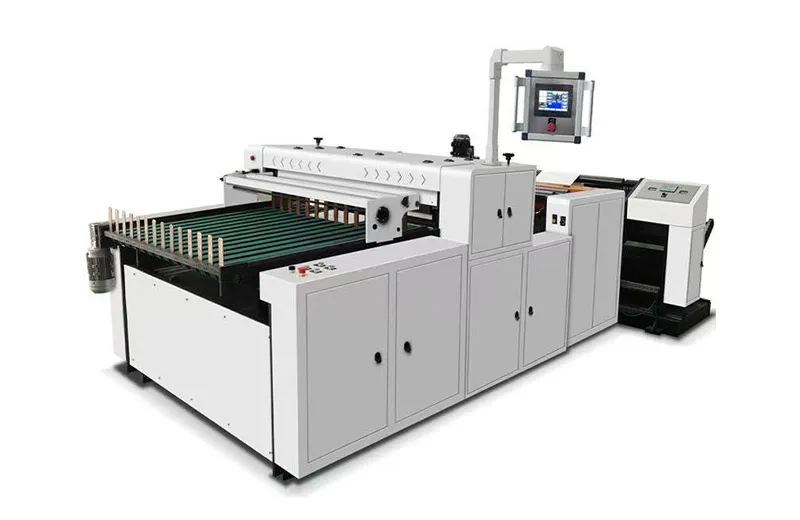
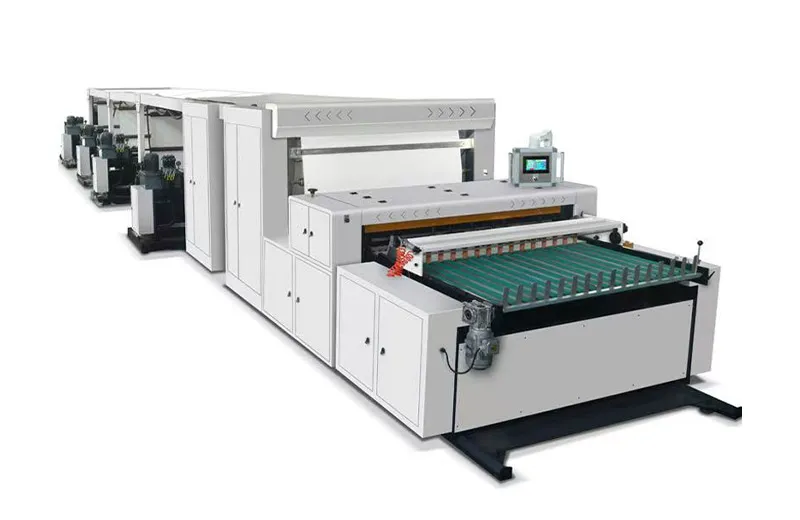
Before diving into metrics, it helps to visualize the fundamental working difference. A flatbed die cutter operates with an intermittent stop-start motion: the material feed pauses while a steel rule die descends vertically to kiss-cut or through-cut the stock. This mechanical simplicity gives it tremendous versatility in web width and material thickness, but it also creates a speed ceiling.
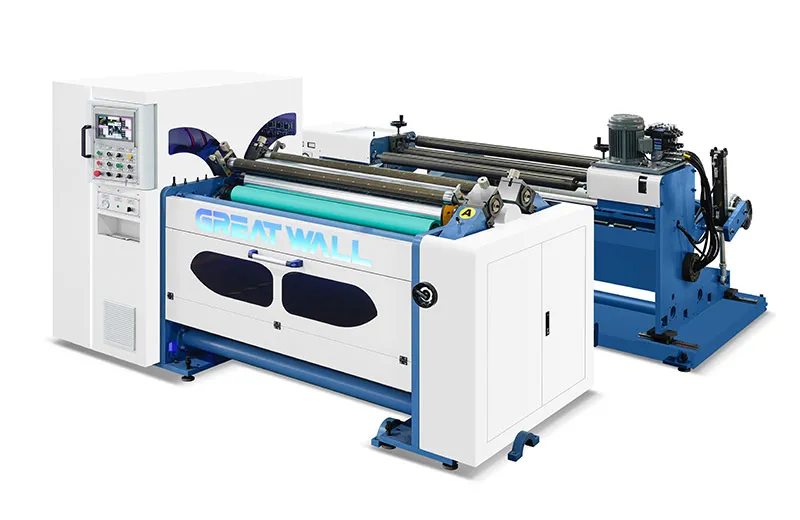
In contrast, a rotary system relies on a continuous motion principle—the web flows without interruption between a precision-ground magnetic or solid die cylinder and a hardened anvil roller. This architecture, often found in systems built around flexible magnetic cylinders, unlocks the speeds converters dream of but historically came with a cost premium on the tooling side.
Speed and Throughput: Where the Lines Blur
Let’s address the most common—and often misleading—spec on the datasheet. Flatbed presses typically quote mechanical speeds of 8,000 to 12,000 cycles per hour. In rotary converting, equivalent systems regularly run at 50 to 80 meters per minute, which on a press handling 200mm repeat lengths can translate to over 15,000 impressions per hour, with some high-end modular equipment reaching double that.
But here’s the nuance: raw strokes per minute mean nothing if job changeover eats your shift. Flatbed systems that use interchangeable chase frames can swap die sets in under 10 minutes. A magnetic cylinder-based web-fed machine can do it in under 90 seconds, without tools. If your typical order book contains dozens of short-run SKUs, that setup time differential quickly overwhelms the cruising speed advantage. It’s the multiplication of “time spent cutting” versus “time spent preparing to cut” that defines your true daily capacity. For operations where changeover agility is non-negotiable, many teams find that a modular rotary converting system designed for fast die changes becomes a clear productivity lever.
Substrate Flexibility: Who Handles the Tough Stuff?
Flatbed cutting holds a genuine edge when you deal with heavyweight substrates—think 400gsm board, corrugated liners, or materials with a tendency to crack under tight radius bends. Because the die hits the material while it’s stationary and flat, you can apply enormous tonnage and dwell time without worrying about web tension control or cylinder deflection.
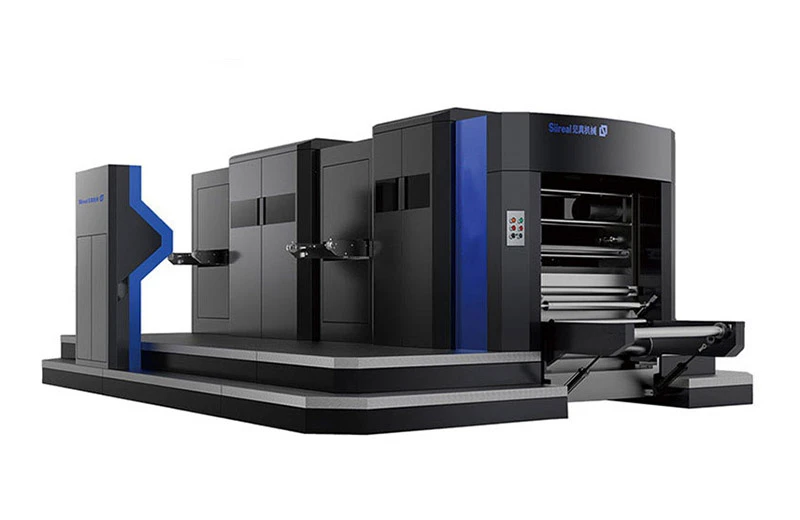
Rotary technology, on the other hand, truly shines on thin, delicate, and extensible films. When you’re converting 30-micron BOPP, flexible packaging laminates, or unsupported PE, the continuous web path eliminates the acceleration-deceleration shocks that cause register drift and material distortion. An experienced operator once told me, “On a 12-micron PET liner, the flatbed system was producing ±0.2mm register; after we transitioned to a web-fed magnetic die cutting setup, we held ±0.1mm without breathing on the tension zone.” That’s not a machine specification—it’s a material physics limitation being bypassed. If your product mix is tilting decisively toward thin-gauge films and flexible packaging, evaluating equipment engineered for stable, high-tension web handling on delicate substrates is a logical next step.
Tooling Costs and the Breakeven Fallacy
A persistent myth in the industry is that flatbed tooling is “cheap” and rotary tooling is “expensive.” As with most things in manufacturing, the reality is volume-dependent. A flatbed steel rule die might cost $80–$300 depending on complexity, making it irresistible for prototyping and ultra-short runs. A solid rotary die, by contrast, could be $2,000+, and a flexible magnetic die might range from $150 to $800. But that comparison ignores two factors: longevity and repeat accuracy.
A quality flexible die can deliver 500,000 to over 1 million impressions before resharpening—flatbed rules wear faster, especially when kiss-cutting abrasive thermal labels. More importantly, when you reorder a flexible die from your supplier, you get a digitally manufactured clone of the original, guaranteeing that the cut geometry on this year’s repeat job matches last year’s setup perfectly. This repeatability is critical in pharmaceutical labels where fold lines and peel tabs must hit precise coordinates. The break-even calculator needs to count the cost of re-registration, make-ready waste, and operator tinkering, not just the invoice price of the tool.
Below is a summary table to guide your initial evaluation.
| Feature | Flatbed Die Cutter | Rotary Die Cutter (Magnetic Cylinder) |
| Ideal Run Length | 1–5,000 sheets/webs | 5,000–1,000,000+ impressions |
| Substrate Sweet Spot | Heavy board, carton stock, >250gsm | Film, foil, labels, PE, ≤250gsm |
| Max Mechanical Speed | ~8,000–12,000 cph | Equivalent to 15,000–30,000+ cph (web speed dependent) |
| Tool Change Time | 5–15 min (chase exchange) | <2 min (magnetic cylinder) |
| Tooling Cost (Entry) | Low | Medium |
| Kiss-Cut Consistency | Requires skilled setup | Highly repeatable once set |
| Register on Extensible Film | Challenging | Excellent with proper tension control |
Decision Framework: When to Stay Flat, When to Go Rotational
If your daily workflow is structured around short-run folding cartons, heavy board with deep embossing, or a large-format sheet-fed operation, a flatbed system remains a pragmatic choice. The ability to use low-cost, quickly fabricated steel rule dies and process sheet sizes beyond the width limitations of most web-fed machines is undeniable.
However, if your shop is chasing growth in the pressure-sensitive label market, shrink sleeves, in-mold labels, or any segment where thin, roll-fed substrates dominate, the economics rapidly tilt toward rotary. This is especially true when you factor in the integration of consecutive processes like lamination, cold foil, and slitting in a single pass. The ability to complete a multi-step converting process inline without manual sheet handling isn’t just an efficiency gain—it fundamentally changes your cost per thousand labels. Those who have successfully scaled their label business often point to a strategic investment in inline finishing as the inflection point.
Avoiding the Common Pitfalls in Rotary Cutting
Even with the right machine, success isn’t automatic. One subtlety often overlooked is the interaction between the anvil roller hardness and the die blade geometry. A worn or improperly specified anvil cover will degrade die life dramatically and cause inconsistent cutting depths across the web. A rule of thumb from the field: measure your anvil surface with a durometer weekly, and never exceed the die supplier’s recommended hardness range (typically 80–90 Shore A for standard flexible dies). Additionally, the tension zone just before the cutting nip must be isolated—any feedback from the unwind or rewind that propagates into this zone will manifest as length-wise cut variation. Investing time in setting up load-cell-controlled tension dancers, rather than relying on manual potentiometer adjustments, pays back exponentially in scrap reduction.
Finding the Right Fit for Your Production Floor
No white paper can substitute for a material run-off on your own substrates. The theoretical specs of a high-speed rotary press mean nothing if your operator team isn’t equipped to manage the thermal expansion of magnetic cylinders during a 12-hour shift, just as the flatbed’s tool cost advantage evaporates if you’re losing five labels per sheet due to material shift on press. The right partner does more than ship a machine; they provide the application engineering to match anvil compounds, blade angles, and ejection rubber formulations to the exact label stock you’re converting.
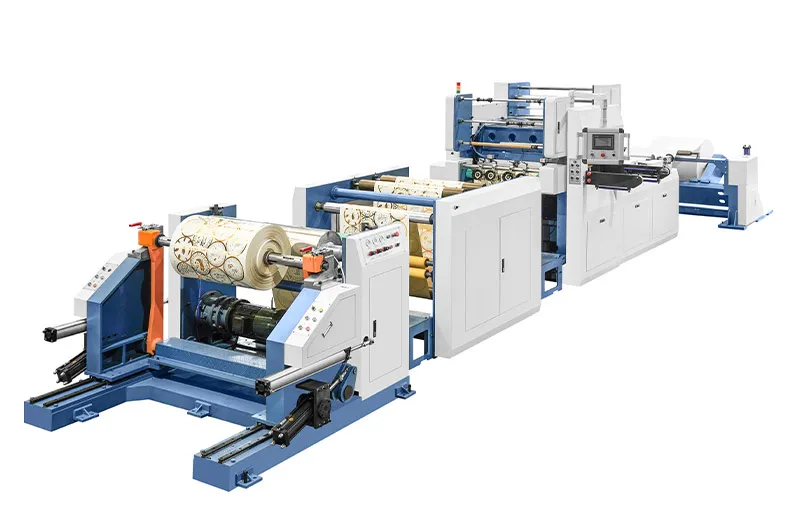
If you’re looking to move beyond generic performance claims and get a tailored assessment for your mix of films, adhesives, and liners, explore what Changcheng’s application-focused converting equipment brings to a real-world production environment. Their engineers routinely work with converters transitioning from sheet-fed to web-fed workflows, offering modular configurations that can start as a standalone die cutting unit and grow into a full inline printing and converting line.
References & Further Reading
-
ISO 12647-2: Graphic technology – Process control for the production of half-tone colour separations, proof and production prints (relevant for color register tolerances in finishing lines).
-
TAPPI T 402: Standard conditioning and testing atmospheres for paper, board, pulp handsheets, and related products (basis for material testing before die cutting trials).
-
Flexographic Technical Association (FTA) guidelines on flexible die specifications for narrow web applications.
Disclaimer: This article is for informational purposes only and reflects general industry knowledge as of the publication date. Machine specifications and performance vary by manufacturer and configuration. Always conduct on-site testing with your own materials before making capital equipment decisions.