 English
 Español
 عربي
عربي Every production manager remembers the moment a new piece of equipment hits the floor and… doesn’t deliver. The material frays. The edges aren’t square. Changeovers take twice as long as promised. A sheet cutter is deceptively simple in concept, but the gap between a spec sheet and day-to-day reality can be wide—and expensive.
The best way to close that gap is to ask the right questions before signing a purchase order. Whether you’re cutting flexible packaging films, technical textiles, paperboard, or composite panels, the answers to these seven questions will shape not only which machine you choose, but how many shifts of headache-free production you actually get. Along the way, I’ll point you toward a modular straight-blade cutting system that addresses many of these concerns by design—but first, the questions.
1. What exactly are you cutting—and what happens if the blade interacts wrong?
It’s not enough to say “plastic film” or “fabric.” A 50-micron LDPE behaves entirely differently than a 200-micron rigid PVC sheet. Elastomeric materials can grab a blade; brittle films can micro-crack under excessive pressure. Before you evaluate any cutter, map your material portfolio: base polymer, thickness range, tensile elongation, surface friction, and whether it’s single-layer, laminated, or coated.
Why this matters: the cutting mechanism that slices paper cleanly may crush a foam-backed textile or weld a heat-sensitive film at the cut line. Look for evidence that the cutter has been tested on materials similar to yours. Ask potential suppliers for sample cut results on your actual substrate—and insist on seeing the edge under magnification. If the machine’s blade geometry, clamping pressure, and feed speed aren’t tuned to your material’s mechanical properties, no amount of after-sales tweaking will fix it.
2. What level of precision do you actually need—and what does “precision” mean for your downstream process?
In sheet cutting, precision isn’t just about dimensional tolerance; it’s about edge quality, squareness, and repeatability over thousands of cycles. A ±0.2 mm length tolerance might sound impressive until you realize your next machine—a folder-gluer or an ultrasonic welder—requires edge angles within 0.5° for proper registration. Define precision in terms that your downstream process understands.
Inquire about the cutter’s positional repeatability data, not just its encoder resolution. A high-resolution linear encoder doesn’t matter much if the material can slip in the pinch rollers. Look for mechanical designs that eliminate cumulative play: direct-drive backguages, rigid blade holders, and precision-ground guide rails. If you’re cutting registered printed sheets, ask how the machine handles print-mark sensors and what compensation logic it uses for pitch variation across a roll.
3. How will blade life and changeover downtime carve into your per-part cost?
Blade wear is silent and gradual—until it isn’t. A slightly dull blade starts by leaving a burr, then forces the operator to slow the line, then begins damaging the cutting stick or anvil, creating a cascade of quality issues. When evaluating any sheet cutter, move the conversation away from “blade material grade” (everyone mentions carbide or tool steel) and toward the real-world factors that determine blade life: edge retention under your specific material’s abrasiveness, ease of blade replacement, and whether the blade can be resharpened on-site.
Also ask about changeover time. A dovetail or cassette-style blade holder that lets an operator swap blades in under two minutes can save more money over a machine’s life than a 10% lower purchase price. This is where a quick-change blade mechanism with integrated blade-height presets makes a measurable difference on the shop floor—less dependence on maintenance staff, faster return to production.
4. What happens when your sheet sizes change—and how often does that happen?
It’s easy to buy for today’s best-selling SKU and overlook tomorrow’s short-run reality. A cutter with a fixed sheet-length range of, say, 200–1200 mm may cover 90% of your current work, but what about the growing customer asking for 1600 mm panels? Stack sheet capacity matters too: can the machine’s feed table handle a 1200 mm tall pile without toppling or mis-feed?
Beyond the dimensions, consider the adjustment method. Manual handwheel-driven backstops are fine for long runs, but if you’re doing five changeovers a shift, look for programmable servo-driven positioning that stores job recipes. The time saved on each setup compounds quickly. At the same time, verify the clamping mechanism handles your full thickness range without deformation—vacuum-assisted or segmented clamps can hold thin, flimsy sheets flat where a single mechanical rail can’t.
5. How will this machine integrate with the upstream and downstream flow?
A standalone sheet cutter is an island, and islands create manual handling costs. Even if you’re not ready for full lights-out automation today, the architecture you choose now determines what’s possible in two years. Ask how the machine communicates: does it support common industrial protocols such as EtherNet/IP or Profinet? Does it have a physical interface for a conveyor infeed, robotic pick-and-place, or an automatic stacking system?
Think about material flow, not just data flow. A cutter with a low-profile bed and an open front design makes it easier to position a scissor-lift table for continuous feeding. Dust extraction ports are critical if you’re cutting paper, carbon fiber, or anything that generates debris. These features are often overlooked in a spec-sheet comparison but directly impact how the machine fits into a lean production cell. A configurable sheet cutting platform designed for future automation typically includes modular I/O blocks, pre-drilled mounting points for sensors, and space for conveyor interfacing—details that prevent costly retrofits later.
6. What safety standards are non-negotiable, and how do you verify them?
Sheet cutters involve a significant pinch point where the blade meets the table, and guarding can’t be an afterthought. Look for CE marking backed by a Declaration of Conformity that references the specific harmonized standards applied—EN 1010 for printing and paper converting machinery, or ISO 13857 for safety distances, for instance. A legitimate manufacturer will share the certificate, not just stamp the logo.
Two-stage foot pedal operation, light curtains that stop blade motion within milliseconds of intrusion, and a physical blade guard interlock are baseline expectations. If the cutter will be used by multiple shifts with varying skill levels, consider whether the control interface includes a lockout-tagout point and emergency stop redundancy. A machine that’s physically safe but confusing to operate can still cause injuries through procedural errors—opt for clear, language-neutral HMI icons and visual blade-zone indicators.
7. What does support look like after the warranty expires?
The best machine in the world is a liability without accessible spare parts and knowledgeable service. Ask the vendor: where are your regional service engineers based? What is the average response time for a remote diagnostic session? Are critical wear items—blades, cutting sticks, drive belts—available off-the-shelf, or must they be manufactured to order? Get specific part numbers and lead times in writing.
Also evaluate the knowledge transfer you’ll receive. A half-day on-site training that covers not just button-pushing but material setup optimization, cleaning intervals, and blade condition assessment pays for itself by reducing preventable calls. If the supplier offers a digital portal with maintenance videos and troubleshooting guides, that’s a strong indicator of a company that views support as a product, not a cost center.
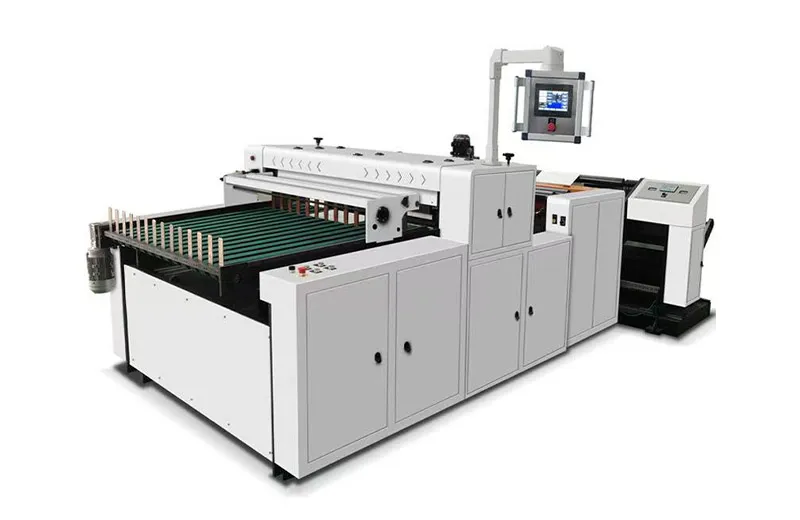
From questions to confidence
These seven questions don’t have one-size-fits-all answers; they’re designed to surface the trade-offs that matter for your operation. A high-speed packaging converter will prioritize throughput and quick changeover, while a precision medical materials processor will weigh edge quality and contamination control more heavily. The point is to have the conversation with data, not just a brochure.
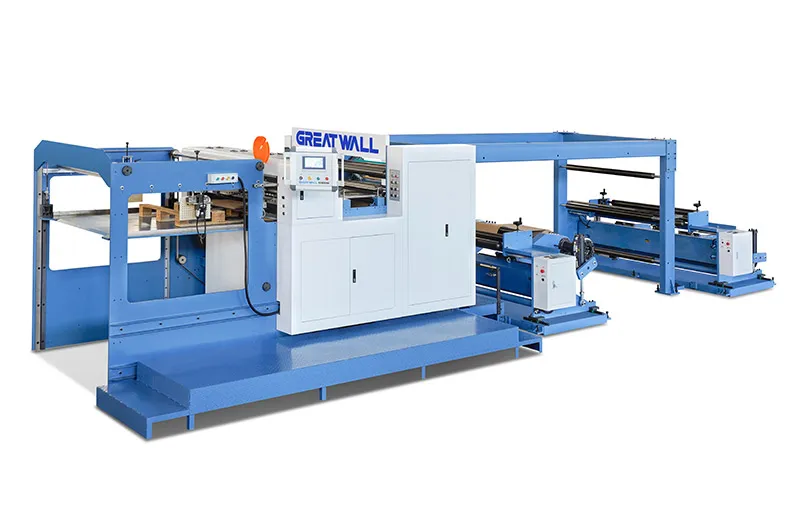
If your answers point toward a robust, mechanically simple cutting action with low maintenance overhead, it’s worth taking a close look at a straight-blade approach. Changcheng has built a platform around that philosophy—one that emphasizes quick blade changes, rigid construction for repeatable accuracy, and a modular architecture that grows with your line. You can explore the straight-blade sheet cutter’s detailed specifications here.
Having guided dozens of production teams through this selection process, I’ve seen that the winners aren’t those with the biggest budgets—they’re the ones who know exactly what questions to ask. Hopefully, this list gives you seven to start with.